Hermann Brehm / naturepl
Hermann Brehm / naturepl
Less than a year
Length: 9.5 - 12cm; Tail: 7.7 - 11.8cm; Weight: 14 - 45g
Native and Listed as Least Concern on global IUCN Red List of Threatened Species
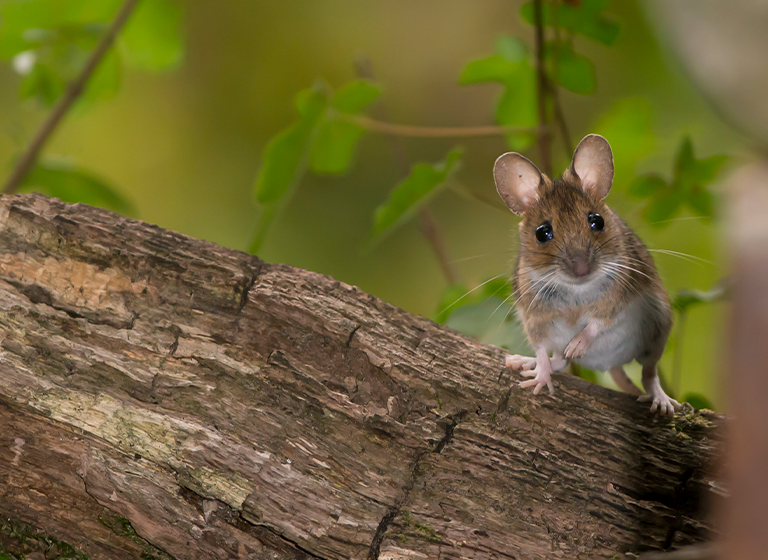
Predominately found in the southeast of England, the Midlands and much of southern and central Wales, the yellow-necked mouse is a common species found in mature woodlands, hedgerows and gardens.
Yellow-necked mice are adept climbers, allowing them to navigate all parts of the woodland environment. These mice typically live in underground burrows, often among root systems, but can also nest in tree cavities or even human-made boxes.
They are named for the distinctive yellow band of fur around their necks, they have a unique defence mechanism: the ability to shed the skin on their tails to evade predators.
Currently, yellow-necked mice are not of conservation concern, however, the loss of mature and ancient woodlands would likely be of concern to the species. Early signs indicate numbers could be rising as a result of climate change, bringing warmer temperatures and, with that, a great food supply.
Can survey all-year-round. Active much of the year. Droppings can be analysed outside of active periods.