Non-native and Near Threatened.
Introduced, localised and Non-native; Likely introduction to Britain by Iron Age traders from France or Northern Spain. UK Red Listed and Near Threatened.
Crocidura suaveolens
(Wild) 12 - 18 months
5 - 7.5cm; Tail: 2.4 - 4.4cm
3 - 7g
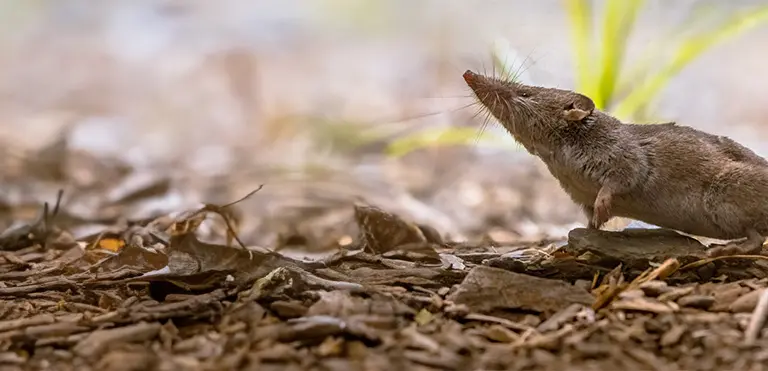
In Britain, the lesser white-toothed shrew (or Scilly shrew) is found on the Isles of Scilly, Jersey and Sark and is believed to be absent from the mainland. UK Red List assessments accepted due to the uncertainty around whether the species is naturalised or native. Studies conducted in 2018 estimated the population at around 14,000 individuals.
Lesser white-toothed shrews prefer habitats with tall vegetation including sand dunes and scrubs. They typically nest underneath logs or wedge themselves between boulders. Well-adapted to a coastal lifestyle, this species of shrew feeds on small crustaceans such as sandhoppers as well as soil invertebrates.
Can survey all-year-round. Active most of the year. Droppings can be analysed outside of active periods.