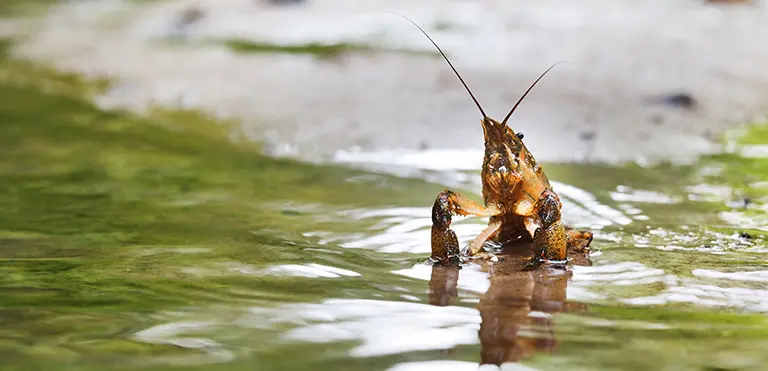
Average = 2 years, some can live up to 4
10cm
Invasive and Non-Native (INNS): Originally from North America, the first wild individual was found in a garden in East Sussex around 2000. Now found scattered across ponds, lakes and river sites where they have been introduced by anglers and pet owners
Spiny-cheek crayfish can be found in ponds, lakes and rivers and tend to prefer calm, turbid waters. They are resistant to water pollution, dry conditions and low temperatures, showing a broad physical tolerance. Females can lay up to 370 eggs in the spring, and can reproduce both sexually and asexually. They are known vectors of crayfish plague and have contributed to the spread of this between native European crayfish populations. They are named due to their distinctive spine cheeks, but have been confused with signal crayfish in the past.
Optimal April-October, suboptimal all-year-round.