Hans Christoph Kappel / naturepl
Hans Christoph Kappel / naturepl
Native and Least Concern
Native and listed as Least Concern on the global IUCN Red List of Threatened Species. Near Threatened in England and Vulnerable in Scotland and Wales. Protected in the UK under the Wildlife and Countryside Act, 1981. European Protected Species under Annex IV of the European Habitats Directive.
Pipistrellus nathusii
Up to 10 years
4.6 - 5.5cm
22.8 - 25cm
6 - 16g
With only a few maternity colonies identified in England and Northern Ireland, the Nathusius’ Pipistrelle is a rare bat in the UK and more often a migratory visitor in autumn.
The species was first recorded in Great Britain in the 1940’s and has been known to breed in the UK since the 1990’s. The first Northern Irish breeding colony was identified at Lough Neagh in 1997 and its current range on the island is largely restricted to around Lough Neagh and Erne. Bat detector reports have also detected individuals in the Republic of Ireland but there have been no confirmed breeding colonies.
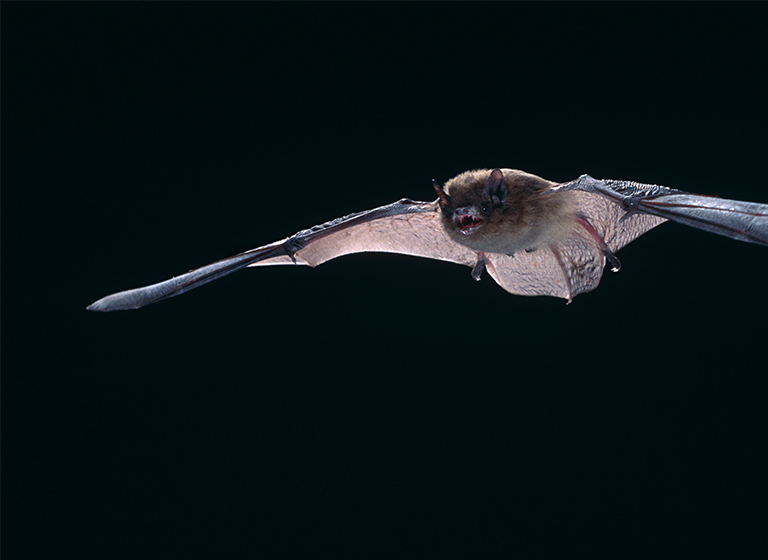
They have reddish-brown fur, occasionally with frosted tips in the belly. Their ears and face are usually dark.
Maternity colonies have been observed in the walls of traditional, stone-built buildings and often share these roosts with soprano pipistrelles. Roosts are often located near freshwater lakes and they utilise water edges to feed on water-associated insects such as midges, flies, and caddisflies.
Can survey all-year-round. Most active from July to September for mating. Migratory individuals can be seen in autumn. Droppings found within roosts can be analysed outside of active periods.