Invasive and Non-Native
Invasive and Non-Native (INNS); Classed as controlled waste under the Environmental Protection Act 1990. The Wildlife and Countryside Act 1981 states it is illegal to cause the species to grow in the wild. Introduced as an ornamental plant from Japan in the mid-19th Century.
Reynoutria japonica
Perennial plant; can remain dormant in the ground for up to 20 years
Bamboo-like canes grow to 2.1m (7ft) tall. Leaves grow up to 14cm and flowers reach up to 15cm
Now very widespread in Great Britain, Japanese knotweed is highly abundant in urban areas particularly in parts of South Wales. Generally less abundant in rural areas. The species was first introduced to Europe in 1849 and was recorded in South Wales in 1886 as an ornamental, architectural plant. The species is still widely grown in parks and gardens.
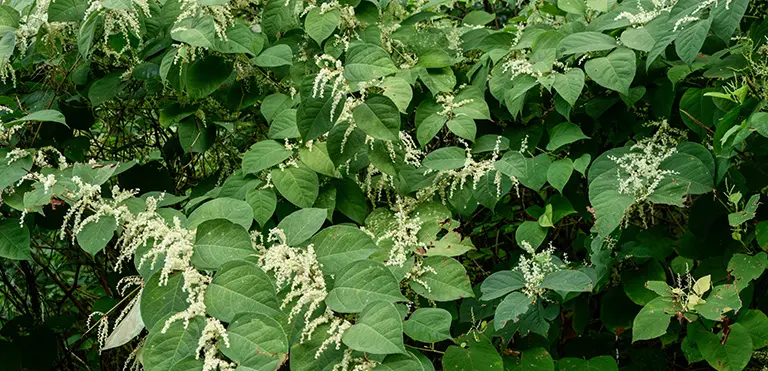
This invasive plant species spreads rapidly, forming tall, dense, annual stems and often grows into dense thickets. Stem growth is renewed each year from the deeply penetrating rhizomes (creeping underground stems). In spring, reddish-purple fleshy shoots emerge from pink buds at ground level. They grow rapidly and in summer they produce dense stands of tall bamboo-like canes. These have characteristic purple flecks and produce branches from nodes along its length. Leaves are heart or shovel-shaped. The stems die back to ground level in winter, but the dry canes remain for several months. They produce creamy-white flowers in late summer to early autumn. In Great Britain, plants are male-sterile clones, producing no seeds. However, plants are capable of hybridising with Fallopia species.
Dispersal is often as a result of human activity (either deliberate or inadvertently). If plant or sections of root are discarded, these can establish easily in new locations and is a particular problem along riverbanks where excavated plant fragments may travel downstream.
Environmental impact is somewhat unknown as it usually occurs in urban areas where native flora is already negatively impacted. Alterations in habitat and biological communities caused by Japanese knotweed are known to impact salmonid fisheries and there is concerns that the species will impact conversation and management of UK waterways.
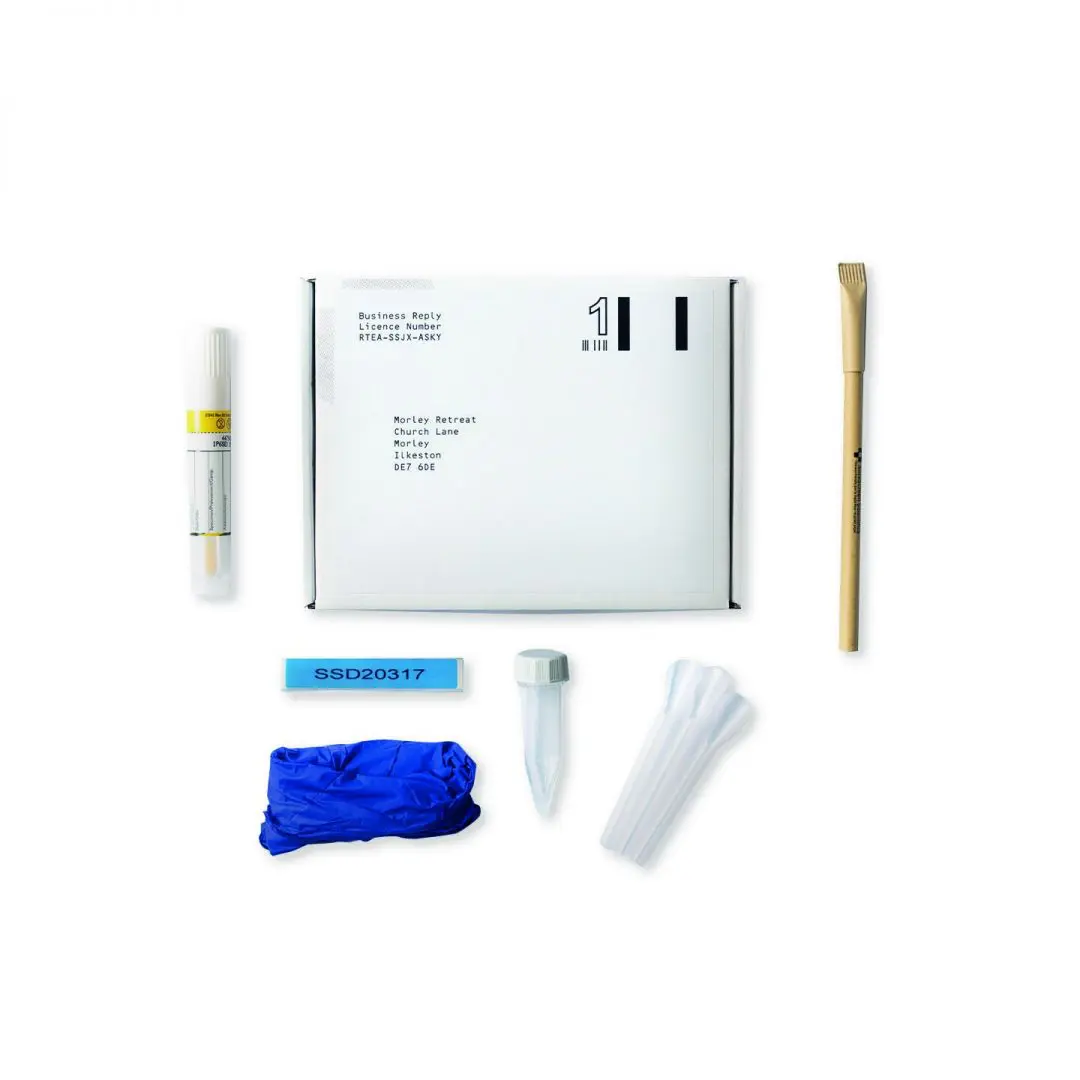
Samples can be analysed all-year-round. Winter identification can be conducted using root material.