Introduced and Non-native; listed as Least Concern on the IUCN global Red List of Threatened Species.
Potential conservation concern to the UK native pygmy shrew, which it has displaced in Ireland. Detected for the first time in GB in 2022 but probably present since at least 2005.
Crocidura russula
Up to 18 months, but can live up to 30 in captivity
4.8 - 8.6cm
2.4 - 4.7cm
5 - 16g
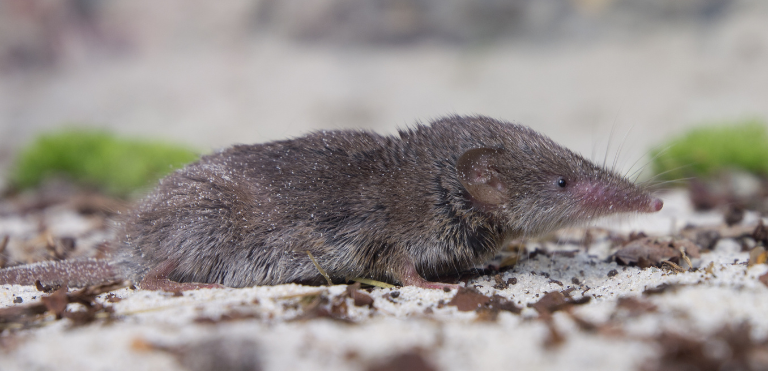
Greater white-toothed shrews have grey/red/brown fur on their upper half and a yellowish-grey underside, with prominent ears and bright, white teeth. This species was first detected in September 2022 following DNA tests and photographic evidence from two sites in county Durham. A separate population was then discovered in Nottinghamshire. It is unclear how this species was introduced to the UK but it is likely a stowaway among good or equipment imported from northern Europe. Greater white-toothed shrews occur in woodland and forest habitats, as well as in regularly or recently cultivated agricultural and domestic habitats.
Specimens can be analysed all year round. Breeding season March - September.