Invasive and Non-Native
Invasive and Non-Native; widely distributed in the wild. It originates from the Caucasus Mountains and Central Asia; introduced to the UK as an ornamental plant in the 19th century, after which it escaped and naturalised in the wild.
Heracleum mantegazzianum
Lives for about 4 years, flowers, sets seed and dies
1.5 - 5m
Almost 1cm long
up to 1.5m wide and 3m long
Found widely in urban and rural areas across the UK, giant hogweed is classed as controlled waste under the Environmental Protection Act 1990 and therefore must be disposed of at a licensed landfill site. It is also illegal to plant or deliberately allow giant hogweed to spread in the UK. It colonises river banks where seeds are easily transported downstream.
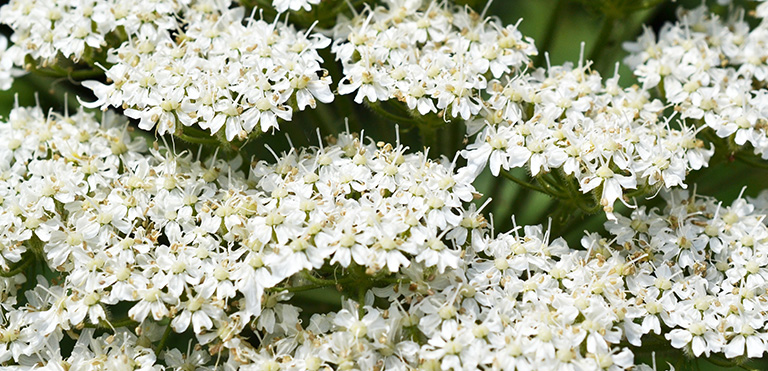
Giant hogweed is a plant of the Apiaceae family which includes plants such as parsley, carrot, cumin, coriander, and parsnip. It forms a rosette of jagged, lobed leaves in the first year before growing a flower in the second year. Its stems are green with purple blotches and stiff, white hairs. Stems are hollow. Their leaves look a bit like rhubarb leaves, irregular and with very sharp edges. The underside of the leaf is hairy. Flowers appear in June and July. They are small and white or slightly pink and clustered together on formations known as umbels, which can reach a diameter of 60cm.
The sap of giant hogweed can cause burns because it contains a chemical which makes skin extremely sensitive to sunlight. Giant hogweed also has significant impact on on native flora, outcompeting species for resources and blocking out sunlight with its dense canopy. The lack of biodiversity alongside riverbanks results in soil erosion and lower water quality.
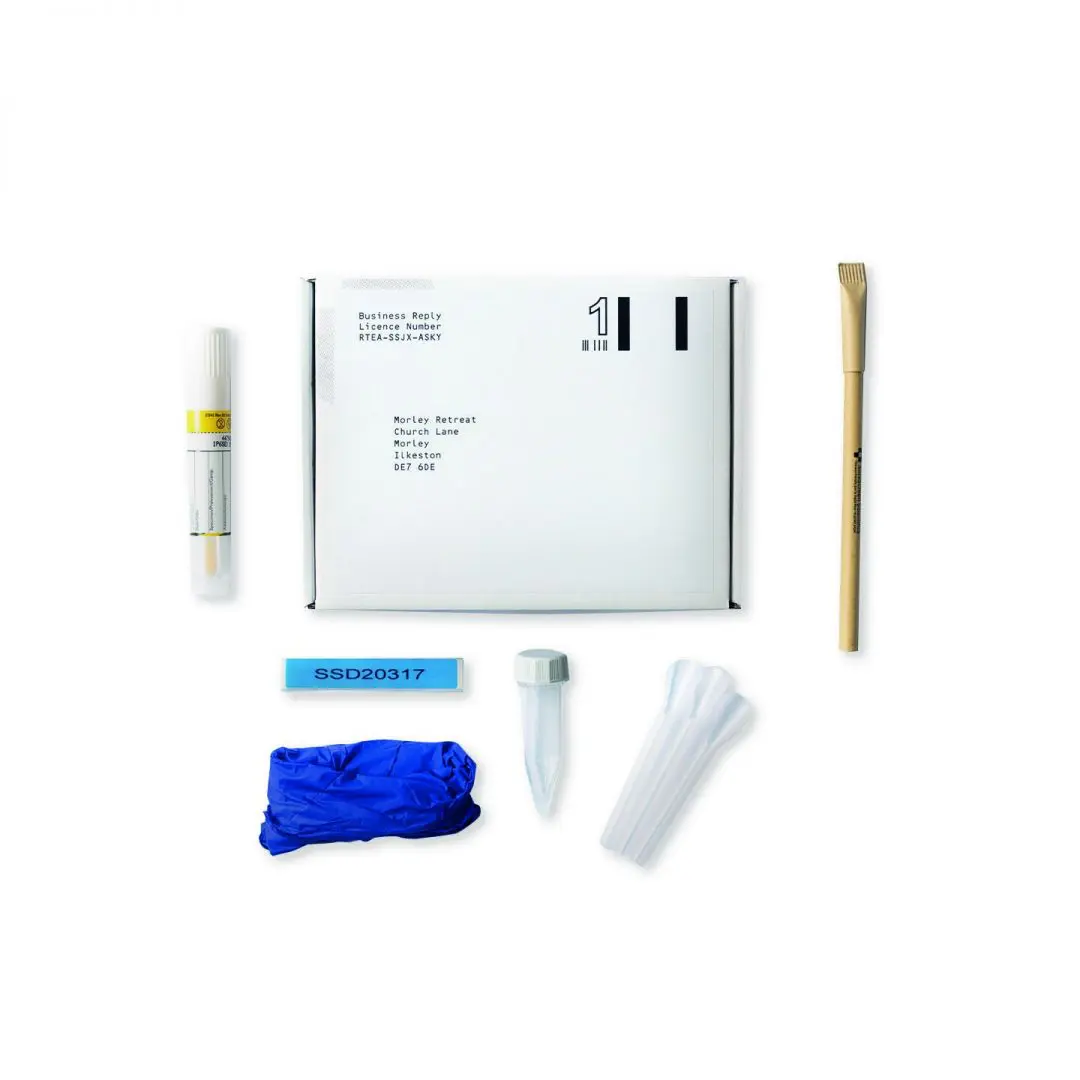
Biological analysis can help with identifying giant hogweed as it can often be confused with visually similar species such as common hogweed (Heracleum sphondylium) and cow parsley (Anthriscus sylvestris).
We recommend sending young leaves in spring and summer for the identification of flowering and non-flowering plants. Roots can be analysed all-year-round.