Laurent Geslin / naturepl
Laurent Geslin / naturepl
Non-Native and Least Concern
Non-Native and listed as Least Concern on the global IUCN Red List of Threatened Species.
Myotis emarginatus
Up to 16 years
4.1 - 10cm
23 - 27cm
6 - 15g
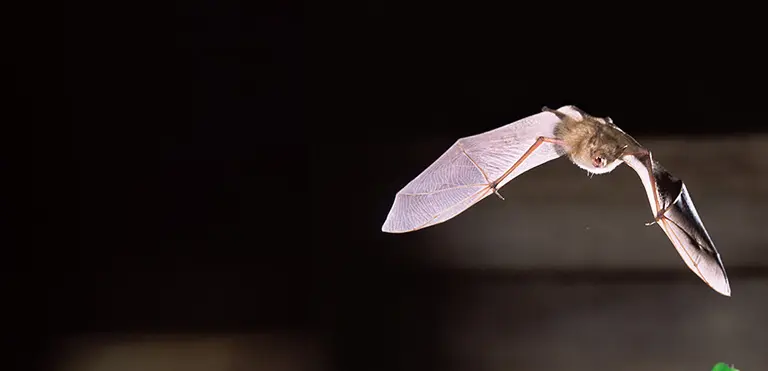
First recorded in the UK in 2012, the full extent of Geoffroy’s bat populations in the UK is still relatively unknown. Few public records exist as sightings. At SureScreen Scientifics, we first identified a Geoffroy’s bat in August 2023. Geoffroy’s bats are commonly found across Southern and Central Europe, with their range extending through Eastern Asia, Mediterranean coastlines, and even the Atlas Mountains in Africa.
They typically roost and hibernate in caves but have also been observed in houses, attics, and barns. As a social species, they tend to remain in colonies and are not highly migratory. Their diet consists of insects such as spiders, moths, and flies, and due to their feeding habits, they are known to carry foodborne diseases.
Can survey all-year-round. Active period unknown. Droppings found within roosts can be analysed outside of active periods.